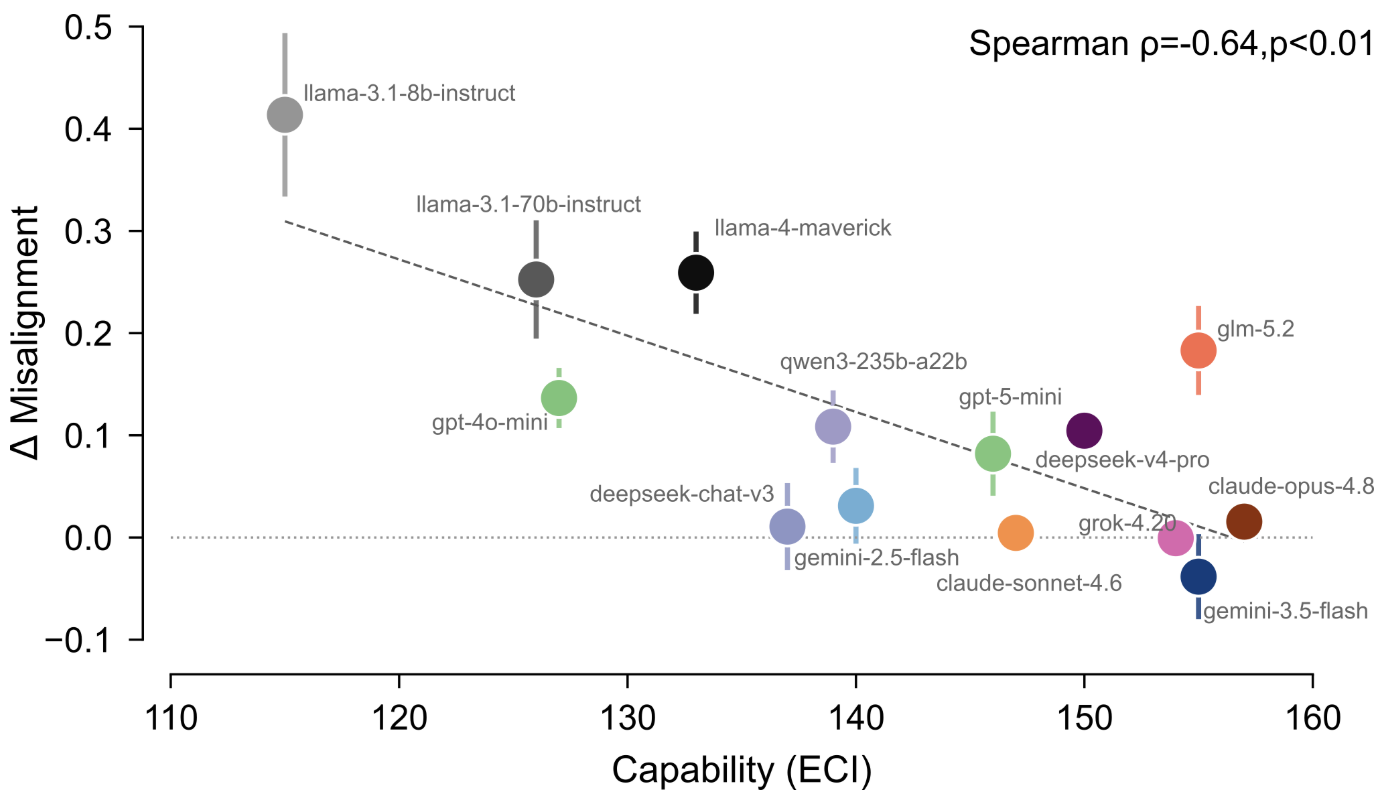
This research was undertaken during the ARENA 8.0 capstone project week, and was awarded a prize. If alignment evaluations are phrased differently, does model behaviour change? In this post, we describe our attempt to answer this question. TL;DR: The data we collected were noisy! Almost every eval, model, and prompt variation direction yielded inconsistent results, making it difficult to draw clear conclusions. Nonetheless, our data suggest that prompt rephrasing can have a measurable impact on alignment-relevant properties, even on frontier models, and we think that the field of alignment evals should take seriously the idea of “fuzzing” prompts to get a more complete view of model behaviour.
Read →Writing
Pieces on physics, AI Safety, and the intersection of the two.
Discerning CERN's Problems: Perspective of an Early Career Researcher Currently writing. Aim: Sept 2026
CERN, Europe’s flagship particle physics laboratory for the past 70 years, is at a critical juncture. While its founding convention has enabled extraordinary success and scale -- the world’s largest experiment, 25 member states, and discoveries underpinning multiple Nobel Prizes -- that ambition is now straining the fabric of practical reality. CERN is going all in on the Future Circular Collider at a capital cost of at least 30 billion CHF and a timeline running all the way to 2100. In this piece I aim to outline what led CERN to this point, and the concerns that the community, especially early-career researchers, must confront.
CERN for AI: First-hand Lessons for AI Safety To be written. Aim: Summer 2026
AI systems have gone from autocomplete toys to passing professional exams to capable cybersecurity experts to a forecast ‘country of geniuses in a data centre’ in under a decade. The unprecedented risks associated with rapidly accelerating capability, wide proliferation, and general-purpose application have driven many researchers and resources into the burgeoning field of AI safety. This field faces a coordination problem strikingly similar to the one that led to CERN’s founding in 1954 when nuclear research was too expensive, too complex, and too important for any single European nation. ‘CERN for AI’ is therefore often floated as a necessary pursuit. In this piece, I aim to draw on my direct experience working at CERN to explore what gave it success and, crucially, what pitfalls any such institution must avoid.