Published Work
I have published 10 peer-reviewed papers as first author, summarised below. My full publication list (over 35 papers in total) including conference papers and papers as a collaborating author is available on my Google Scholar. I have also peer-reviewed more than 5 articles.
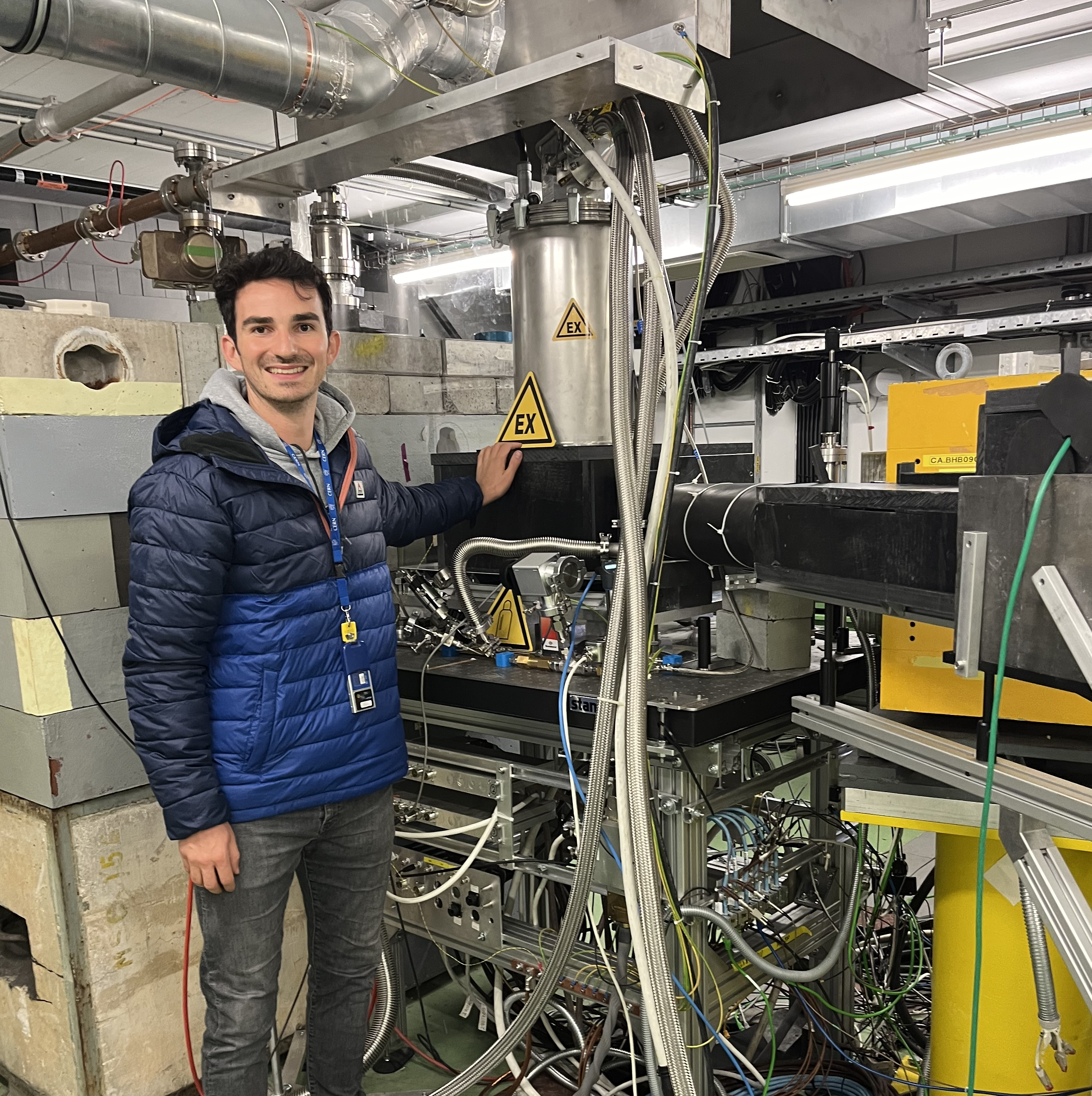
Neutron Time of Flight Experiments in the CLEAR Facility at CERN
I led the 18-month preparation and 3-week execution of an experiment involving over 40 collaborators. The paper presents the design and installation of the experimental setup and reports the first neutron detection results, including observed discrepancies with simulations.
The Versatile ULtra-Compact Accelerator-based Neutron source (VULCAN) project is developing a compact accelerator-driven neutron source (CANS) optimised for neutron diffractometry in industrial and university settings. Central to VULCAN is a novel target-moderator-reflector (TMR) assembly optimised to convert a 35 MeV pulsed electron beam into short neutron pulses (FWHM ≤ 20 µs) in the 1.5–3.5 Å wavelength range. To validate the simulation-driven design process, a prototype TMR was developed for testing at CERN’s CLEAR facility, and this paper presents the design, installation, and results of the first experimental campaign. While moderated neutron pulses were successfully detected, significant discrepancies were observed between the experimental and simulated energy spectra. Potential causes are discussed and recommendations for follow-up measurements are provided.
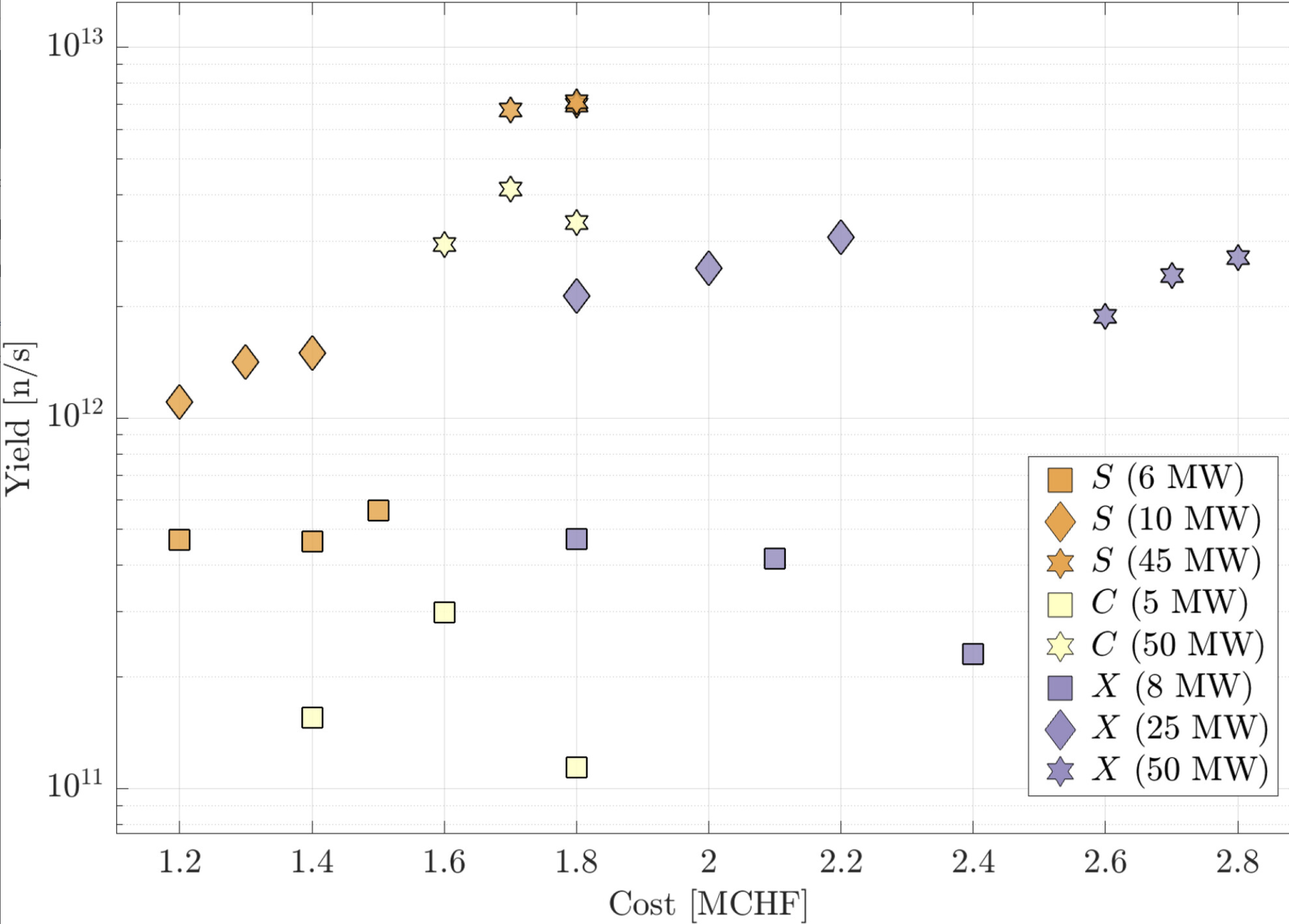
Next-Generation Electron Linear Accelerator Designs for Compact Accelerator-Driven Neutron Sources
I led a research effort to design and optimise a compact particle accelerator for the industrial application of measuring stress in materials. The paper motivates the technology choice, outlines the accelerator design, and presents expected neutron performance.
Global access to neutron scattering is under increasing pressure as research reactors close and demand for spallation sources outpaces supply. Compact Accelerator-driven Neutron Sources (CANS) offer a pathway to more distributed access, yet current designs are often limited by scale, cost, and performance, and no turnkey solutions presently exist. This work explores the potential of next-generation CANS based on high-gradient electron linear accelerators that leverage technology originally developed for high-energy physics applications. By combining mature S-, C-, and X-band RF structures with commercially available RF power sources and compact injectors, we identify and evaluate accelerator configurations capable of delivering tens of MeV, kilowatt-scale electron beams within a few meters of linac length and at accessible cost. To ground the study, we optimise the accelerator in line with the requirements of VULCAN, a concept for a turnkey CANS-based facility optimised for stress-diffractometry and suitable for industrial and university environments. We show that competitive neutron yields and spectra can be attained while maintaining compactness and affordability. These findings open up a previously unexplored region of the CANS design space and highlight the potential of high-gradient accelerator technology to democratise access to neutron scattering through a new generation of compact, affordable, and high-performance neutron facilities.
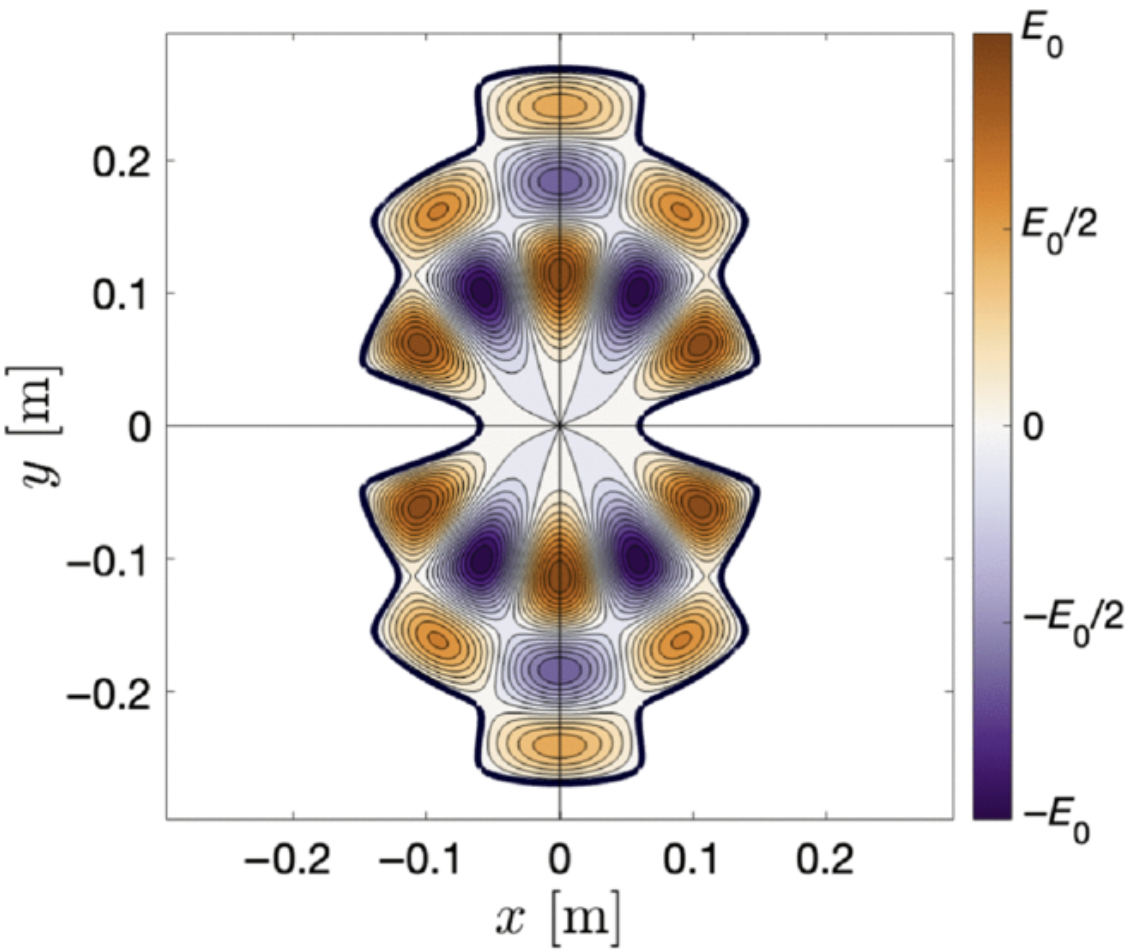
Controlling the Transverse Multipole Components in RF Cavity Modes using the Azimuthal Modulation Method
I followed up a limitation to my earlier paper (Creating exact multipolar fields with azimuthally modulated rf cavities), by extending the mathematical framework to realistic use-cases. The paper presents a detailed mathematical description and simulation-based verification.
Recent work introduced a systematic method for designing so-called azimuthally modulated rf cavities that support transverse magnetic modes composed of user-desired multipoles, enabling precision control of the magnitude and orientation of multipolar components in rf cavity design. This paper extends this method to practical implementation by deriving the multipolar expansion of the longitudinal electric field in such rf cavities with beam pipes, as well as the momentum change of ultrarelativistic particles traversing these modes. The derived equations explicitly show the radial variation of the change in longitudinal and transverse momentum follows a polynomial rather than Bessel-function relationship. The expression for the longitudinal electric field is then compared to a field map obtained from the 3D electromagnetic simulation of an azimuthally modulated cavity designed to support a mode composed of monopole, dipole, and quadrupole components. Beam dynamics studies are presented to assess the derived expressions for the change in momentum, including the effects of relaxing the ultrarelativistic assumption. Finally, two example applications are presented: the first demonstrates the removal of unwanted transverse multipoles to create a multipole-free accelerating structure with a single-port coupler, whereas the second illustrates the synthesis of desired multipoles to create an rf cavity that transforms the transverse distribution of a beam from Gaussian to uniform.
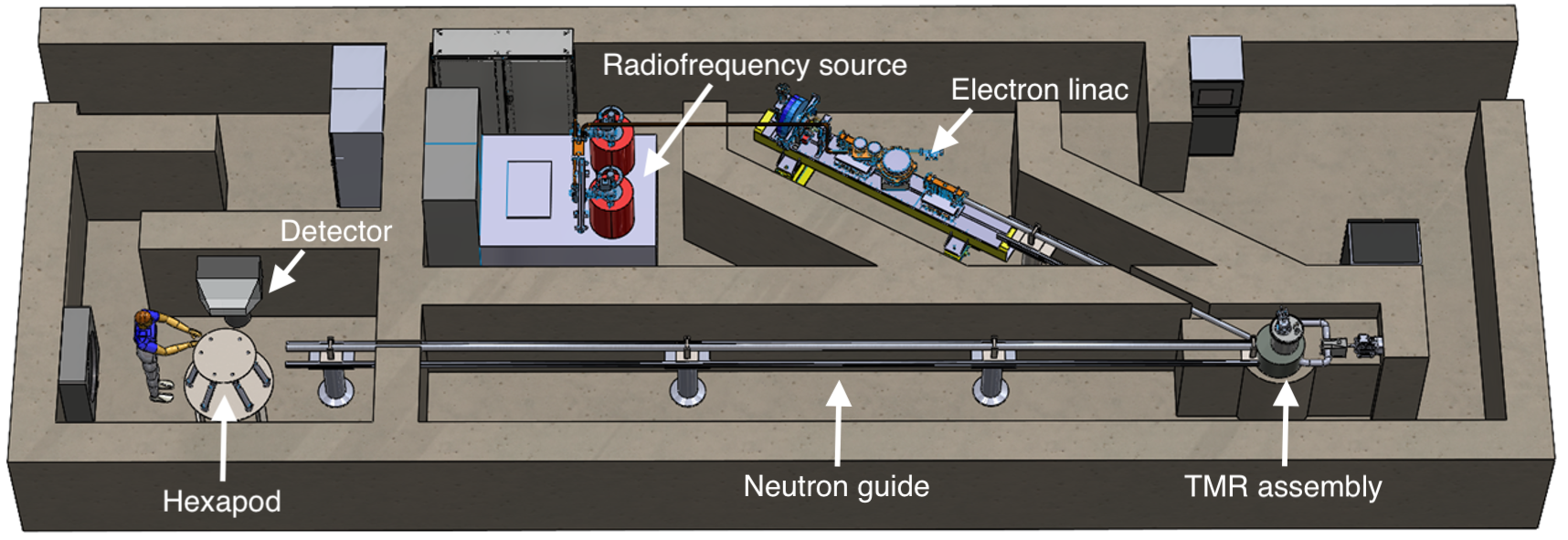
Electron-driven, pulsed neutron source
I researched the use-case of high-gradient accelerator technology for use in a compact accelerator. This paper highlights key results of the investigation.
This article provides an overview of the VULCAN project and its potential to exploit high-gradient and X-band accelerator technology. VULCAN aims to develop a compact, 35 MeV electron-driven neutron source that is commercially viable for industrial and academic thermal neutron scattering applications. The project is first introduced, followed by a discussion of facility requirements that in turn motivate the specifications of the driving electron linac. A high-level overview of the resulting accelerator designs is then presented, highlighting the role of high-gradient technologies in meeting performance targets.
Compact Electron Linacs for Research, Medical, and Industrial Applications
I summarised high-gradient accelerator technology and their current applications and use-cases in particle accelerators.
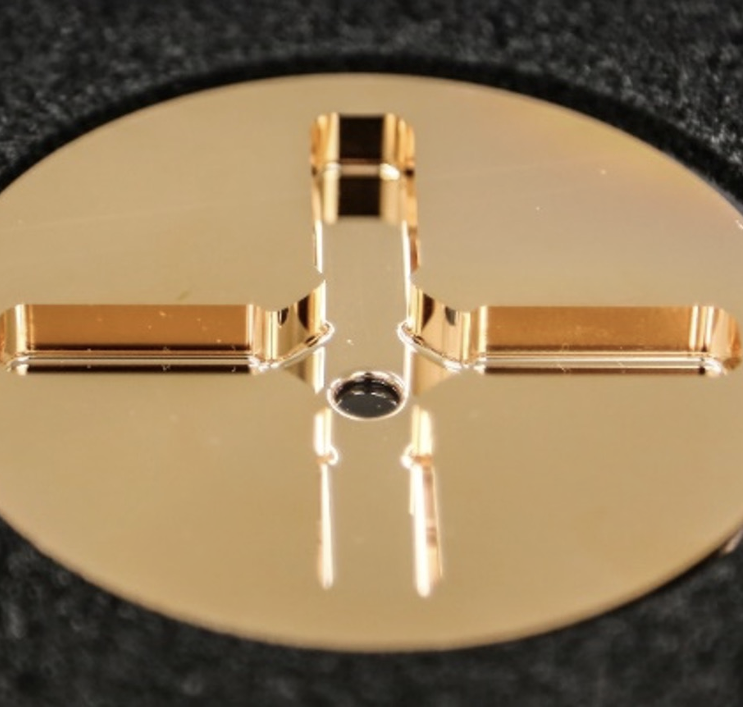
The CLIC study has developed compact, high-gradient, and energy-efficient acceleration units as building blocks for a future high-energy, electron-positron linear collider. The components to construct such units, including RF sources, are now generally available in industry and their properties promise cost-effective solutions for making compact electron-based linacs (already a crucial technology in many research, medical, and industrial facilities) more efficient and compact. The CLIC study has actively promoted and supported spin-off developments for a decade. Examples include beam manipulation and diagnostic devices in research linacs, including Free-Electron Laser light sources; compact inverse Compton scattering X-ray sources; medical linacs, including FLASH radiotherapy; and compact neutron sources for material investigations. This paper describes the X-band technologies developed as part of the CLIC study and discusses examples of compact linacs utilising such technology for different applications.
Novel hybrid multipolar RF cavities for transverse beam manipulations
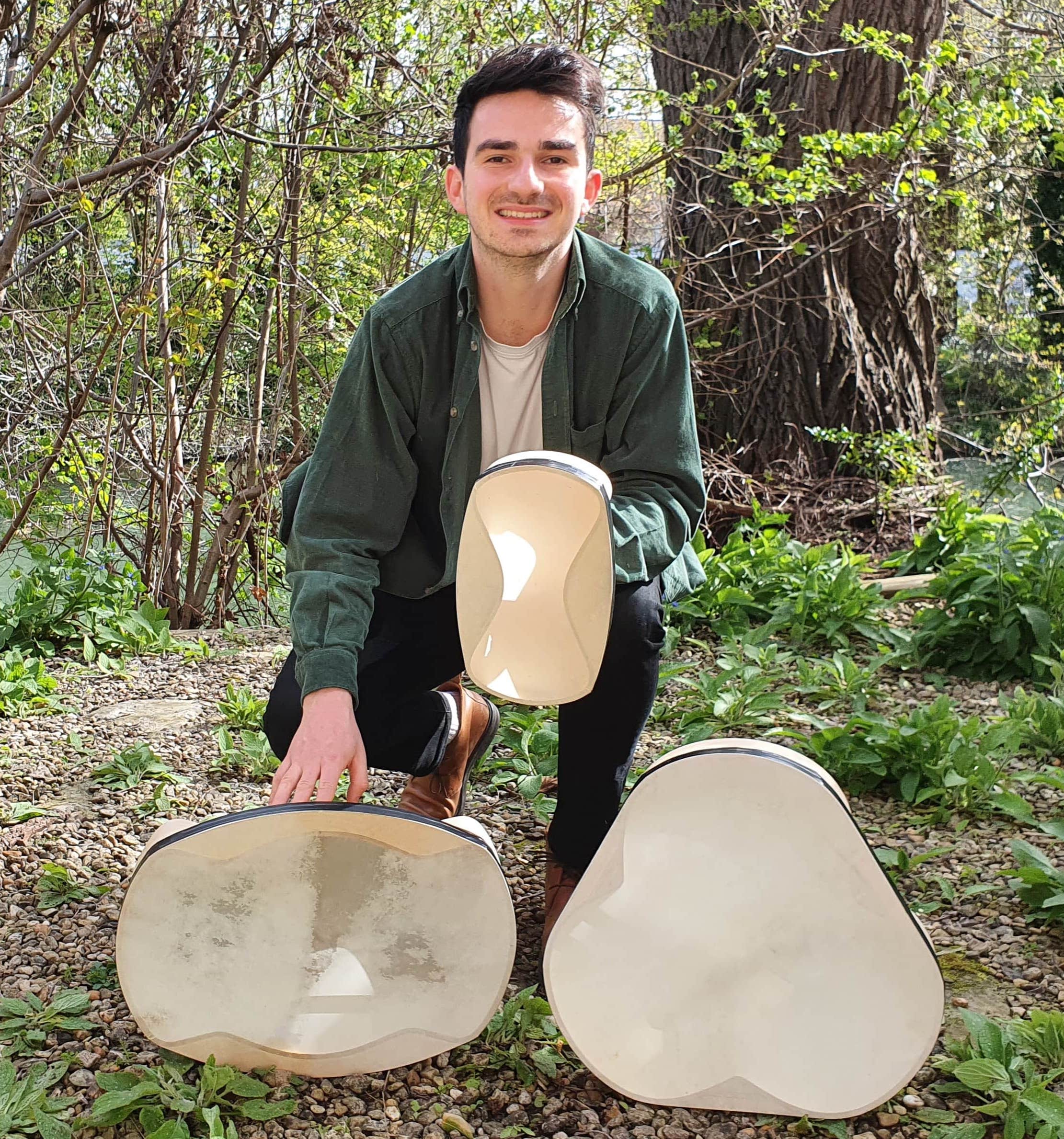
196-page thesis on my PhD research at the University of Oxford. Supervised by A/Prof Suzie Sheehy, Dr. Rob Apsimon, and Prof. Manjit Dosanjh.
This thesis describes the development and application of a method for tailoring the profile of electromagnetic fields in RF cavities for use in particle accelerators. This so-called azimuthal modulation method (AMM) is underpinned by an analytic expression of the basis of the electromagnetic modes in closed RF cavities whose cross-sections vary with the azimuth. This basis is derived and the notation {M}ₙₚ is introduced to describe the azimuthal, radial and longitudinal form of the modes. The scope of the AMM for designing realisable cavities is explored. The underlying reasons for the limitations on the range of magnitudes and orientations of multipoles that can be supported by azimuthally modulated cavities are derived and discussed. This understanding provides the foundation for the latter half of the thesis where numerous applications of the AMM are presented. First, the AMM is used to construct a prototype cavity that supports a 3 GHz mode which could be used for the simultaneous acceleration and focusing of a particle beam. Experimental testing supported the multipolar content of the mode being as designed. Second, the AMM is applied to create RF cavities which support modes free from unwanted multipoles generated by power couplers and tuning pins. An example design of an RF structure which incorporates a single-slot power coupler and supports an accelerating mode free from dipole, quadrupole, sextupole and octupole components is analysed. Third, the AMM is used to design RF cavities that support modes tailored for the off-axis traversal of particle beams. An example optimisation of an accelerating field that remains as flat as possible along the horizontal is presented. Finally, the AMM also finds application in the creation of musical drums. This concept inspired an outreach workshop that was designed and delivered to showcase this research to 11–14 year-old school students.
Creating exact multipolar fields with azimuthally modulated rf cavities
As part of my PhD, I derived a mathematical description of the electromagnetic fields in RF cavities (an accelerator component) and a framework for obtaining those desired fields. The paper outlines the theoretical work and presents simulation and experimental verification.
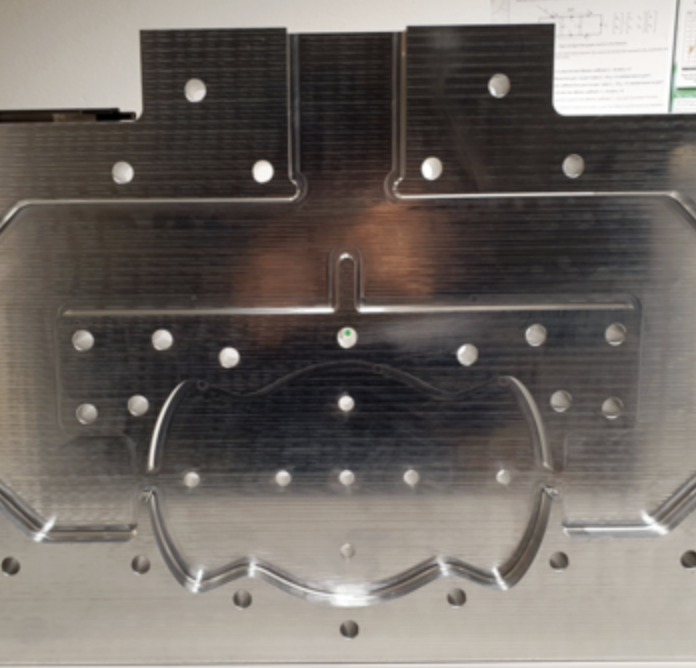
RF cavities used in modern particle accelerators operate in TMₘ₁₀-like modes composed of a single, dominant multipole of order m; m=0 modes are used for the longitudinal acceleration of a particle beam and m≠0 modes for controlling transverse beam dynamics. The practical design of the latter, however, can be complex and require extensive analysis through the iteration of both approximate mathematical models and computationally expensive simulations to optimise the performance of the structure. In this paper we present a new, systematic method for designing azimuthally modulated RF cavities that support modes composed of any number and magnitude of user-specified transverse multipoles, either with or without a longitudinally accelerating component. Two case studies are presented of RF cavity designs that support modes composed of a longitudinally accelerating field in addition to a single transverse multipole, and designs that support modes composed of two transverse multipoles. We discuss generalising the discoveries and conclusions from the two case studies to designing cavities that support modes composed of any number of multipoles. The theoretical work is verified with analysis of 3D simulations and experimental measurements are presented of a cavity operating in a 3 GHz mode that simultaneously longitudinally accelerates and transversely focuses a beam.
RadMaps: A Multi-scale Geospatial Framework for Modelling Radiotherapy Access
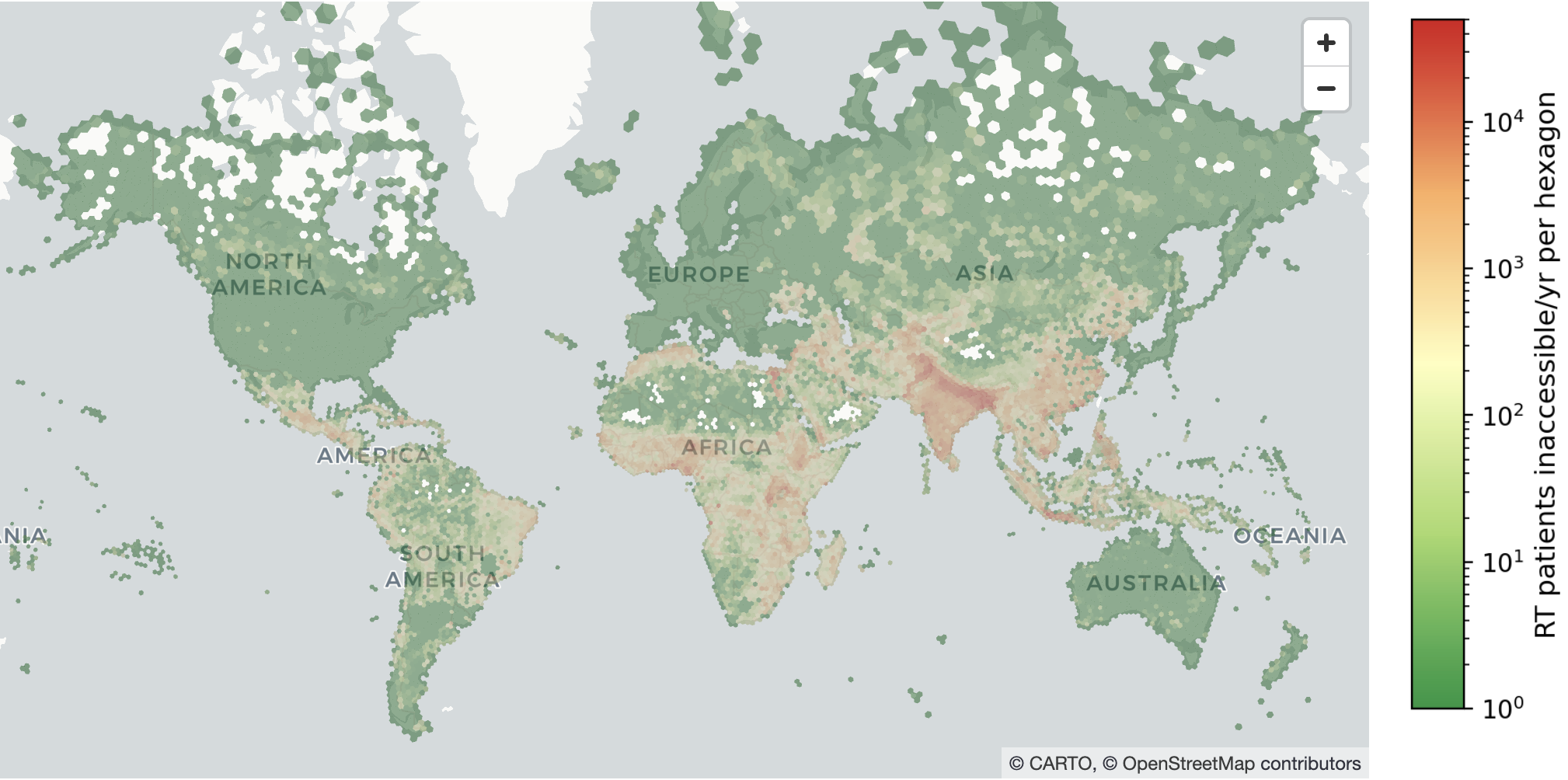
I developed RadMaps, an open-access tool for visualising access to radiotherapy based on machine capacity and distance. The paper describes the framework used, presents example results, and discusses the assumptions and limitations.
Global Collaborations: The European Council for Nuclear Research (CERN) Perspective
I researched and wrote up a chapter on the role of collaboration at CERN and its applicability to the field of medical physics.
The European Council for Nuclear Research (CERN) was founded by 12 European countries in 1954 as one of Europe's first joint ventures. CERN's primary mission is to perform world-class research in fundamental particle physics research and its laboratory on the Franco-Swiss border near Geneva has both constructed and operated numerous ground-breaking particle accelerators and associated experiments throughout its 70-year history. Education and training, international collaboration, and technology development are also important complementing and facilitating parts of the organization's mission, and CERN is committed to identifying and making available opportunities for the dissemination and societal use of its results. In particular, the application of CERN's expertise and unique competencies in particle accelerators, detectors, and computing to the medical domain represents one of the most important opportunities in terms of potential impact on society. In this chapter, we describe CERN's experience and strategy within international engagement in the fields of particle and medical physics and summarize CERN's involvement in enhancing international collaborations for medical physicists.

Comparative Analysis of Radiotherapy Linear Accelerator Downtime and Failure Modes in the UK, Nigeria and Botswana
During my Master's, I won funding for my research project comparing the failure modes of linear accelerators (linacs) used for treating cancer in different countries. As part of this, I visited hospitals in the UK, Nigeria, and Botswana to collect data and directly collaborate with local radiotherapy staff. The paper presents the results, comparing and contrasting the failure modes between environments.
The lack of radiotherapy linear accelerators (linacs) in low- and middle-income countries (LMICs) has been recognised as a major barrier to providing quality cancer care in these regions, together with a shortfall in the number of highly qualified personnel. It is expected that additional challenges will be faced in operating precise, high-technology radiotherapy equipment in these environments, and anecdotal evidence suggests that linacs have greater downtime and higher failure rates of components than their counterparts in high-income countries. To guide future developments, such as the design of a linac tailored for use in LMIC environments, it is important to take a data-driven approach to any re-engineering of the technology. However, no detailed statistical data on linac downtime and failure modes have been previously collected or presented in the literature. This work presents the first known comparative analysis of failure modes and downtime of current generation linacs in radiotherapy centres, with the aim of determining any correlations between linac environment and performance. Logbooks kept by radiotherapy personnel on the operation of their linac were obtained and analysed from centres in Oxford (UK), Abuja, Benin, Enugu, Lagos, Sokoto (Nigeria) and Gaborone (Botswana). By deconstructing the linac into 12 different subsystems, it was found that the vacuum subsystem only failed in the LMIC centres and the failure rate in an LMIC environment was more than twice as large in six of the 12 subsystems compared with the high-income country. Additionally, it was shown that despite accounting for only 3.4% of the total number of faults, linac faults that took more than 1 h to repair accounted for 74.6% of the total downtime. The results of this study inform future attempts to mitigate the problems affecting linacs in LMIC environments.
When Are Two Networks the Same? Tensor Similarity for Mechanistic Interpretability
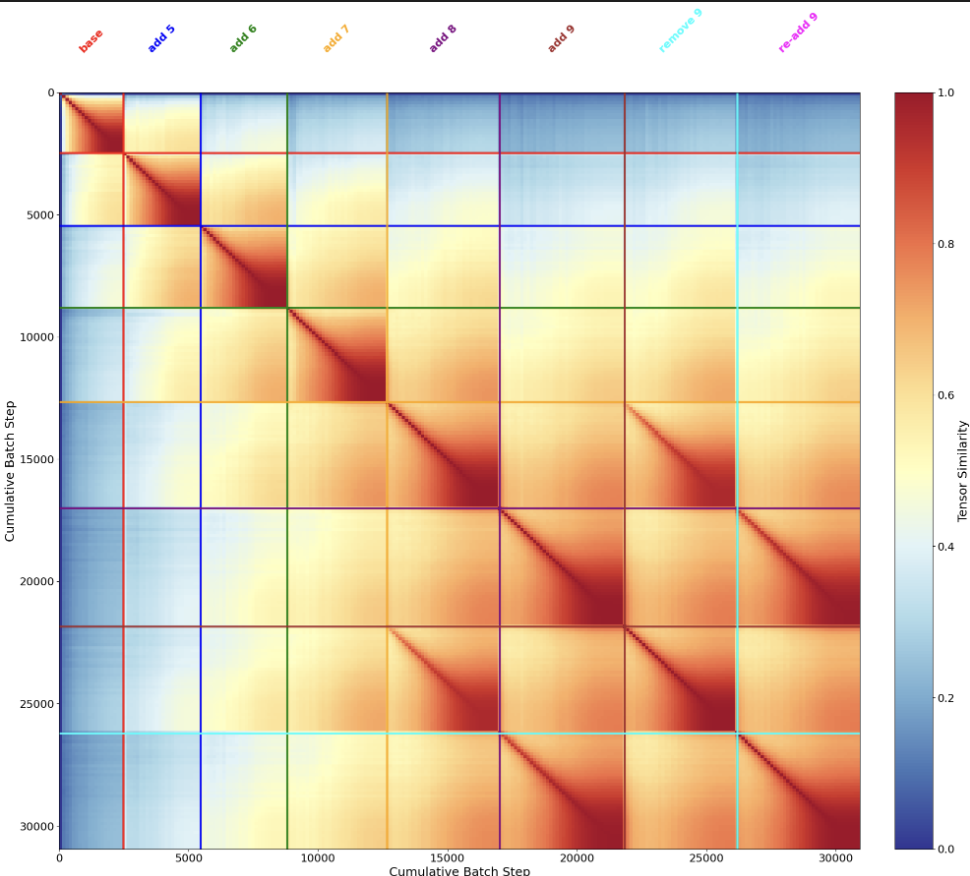
As part of the MARS 4.0 programme, we extended the tensor network framework to calculate similarity and relate it to interpretable properties. I focused on applying the technique to vision datasets (MNIST and SVHN) and determining useful interpretability applications of the method. The paper outlines our findings and future research directions.